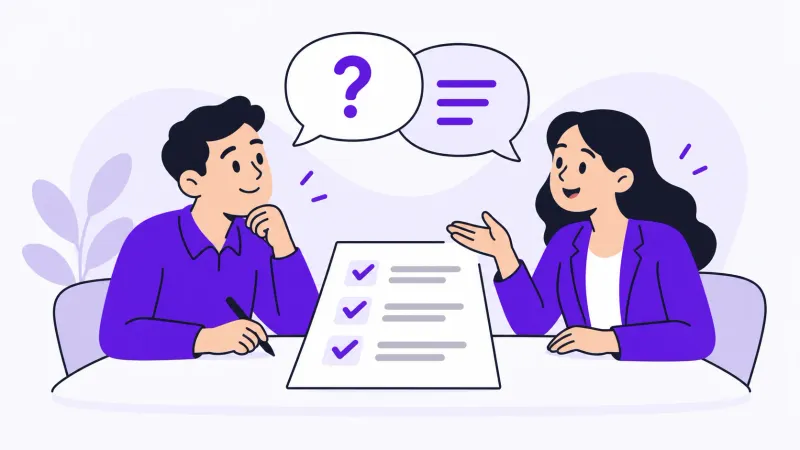
AI in CRM: from email to opportunity
See how Customer Connect interprets emails and pasted text into opportunities. Explore an example and learn what to check and follow up.


A customer describes what they need in an email. To take it further, you need to capture that information and give the opportunity a place in your planning.
In Customer Connect, incoming emails are interpreted to create opportunities. You can also paste in text, such as an email you have copied, and use the same AI interpretation. Then review the information and decide what to do next.
How does the AI help?
The AI starts with the text your customer has sent. It helps you move from a message to an opportunity you can work on in Customer Connect.
There are two ways to start:
- Incoming email: the enquiry is interpreted and creates an opportunity.
- Pasted text: use the same interpretation on text you already have, such as an email you have copied.
If enquiries come from other tools, check how that particular connection works. Read about collecting customer enquiries and the available integrations.
Example: an email about a new job
Here is a fictional enquiry showing the type of information you might work with:
Hello! We would like photos of our team at the office in October. There are around twelve of us, and we need both portraits and a group photo. Would you be able to come to us? Please let us know what you need to prepare a quote. /Sara
The enquiry describes a possible job, an approximate scope and a preferred month. Some details are missing, including the location and exact date.
Use this fictional enquiry as an exercise: which details are clear, and what do you need to ask the customer? When you try an email of your own, review the AI interpretation and compare the information with the original.
Check the information before moving on
Read the original text alongside the result. Ask yourself:
- Is it clear what the customer wants help with?
- Are the contact details correct and sufficient to reply?
- Has an approximate detail been presented as definite?
- Are there questions to answer before you can make a proposal?
In this example, “around twelve people” is an estimate, and October is the preferred month. An exact headcount or a booked date needs to be confirmed with the customer.
Ask the customer to provide the information you need to give a relevant answer.
Give the opportunity an owner and a plan
Once you have checked the information, choose who will take the conversation forward and set a follow-up.
For the photographer, the next step might be to ask for the address and possible dates so they can prepare a quote. After the reply, update the information and plan the next steps around the customer’s needs.
In a team, ownership makes it clear who is responsible for the conversation. If you work alone, the plan helps you pick up the opportunity between jobs.
Continue the customer conversation
The AI interprets emails and pasted text to provide information for the opportunity. Use it when you next contact the customer.
Check the details, reply to the customer and plan the next contact. Review your follow-ups when planning your day.
The guide from lead to deal explains more about the work after an enquiry arrives.
Try an enquiry you know
Choose an email where you already understand the customer’s needs. This makes it easier to assess the interpretation, see what needs adding and try how you want to work on the opportunity.
After you sign up, we contact you to see whether you need help getting started.
Try for free